A good family office can tell you what the family owns before breakfast.
It knows the companies, the trusts, the property, the debt, the insurance and the securities held through structures whose names may no longer mean very much to anybody outside the lawyers who formed them. There will be reports. There will be valuations. Somebody knows which entity owns the house and somebody else knows when the policy on the paintings must be renewed.
Then ask about the paintings.
“The financial system wants one number. The family may need four stories.”
Ask who bought the portrait in the hall. Ask whether the letters in the study belonged to the founder or his father. Ask which edition of the book in the glass cabinet was given to the family, and by whom. Ask why a small bronze has travelled through three houses even though nobody particularly likes it.
The quality of the answer often changes.
This is strange because a family that has taken great care to preserve its capital may eventually discover that capital was the easiest part of the inheritance to document.
Money is wonderfully cooperative. It produces statements.
Objects are less helpful.
A painting may have an invoice in one house, correspondence in another and an old photograph showing it on a wall fifty years before anyone thought to ask where it came from. A watch may be financially unimportant and personally irreplaceable. The first share certificate from a business may have almost no market value. It may still explain more about the family than a portfolio worth a thousand times as much.
Museums understand this because they cannot afford to separate the object from its record. Provenance research asks who owned an object, how it moved and what evidence survives for those movements. The Smithsonian describes this work as a continuing part of curatorial practice and notes that provenance can affect questions of ownership, authentication and significance.
Private houses tend to learn the same lesson later.
I do not think the answer is to turn the family home into a museum. Homes should remain homes. Children should be able to touch things. Chairs should be sat upon. Books should acquire marks that would distress a dealer.
The answer is to borrow one profession from the museum and place it beside the professions the family office already understands.
The curator.
The word has become badly weakened. Restaurants curate menus. Shops curate candles. People curate their weekends. In its useful sense, a curator accepts responsibility for understanding a collection.
That person does not need to decide whether the family has good taste.
The work begins with simpler questions.
What is this?
Why is it here?
Where did it come from?
What do we know?
What have we assumed?
What should remain with it if it moves?
A curator in a private house would inevitably cross boundaries that accountants and investment managers prefer to keep separate. A seventeenth-century book may be an asset, an heirloom, a scholarly object and a gift from a dead grandfather at the same time. The financial system wants one number. The family may need four stories.
This becomes more important as wealth survives its first generation.
Founders usually know too much to understand how much they know. They can walk into a room and explain where everything came from. They remember which customer sent the silver bowl, which architect chose the stone, which painting was bought before there was money, and which apparently important object was simply acquired because somebody had an empty wall.
The next generation receives the objects without receiving the invisible catalogue in the founder’s head.
That is how meaning leaks out of houses.
A generation later the story becomes “I think this belonged to my grandfather.” Another generation later it becomes “family piece.” Eventually somebody asks for a valuation and the object is understood principally by what another person would pay for it.
There is nothing immoral about selling things. Collections change. Families change. Some objects should leave.
But the decision is better when the family knows what it is deciding about.
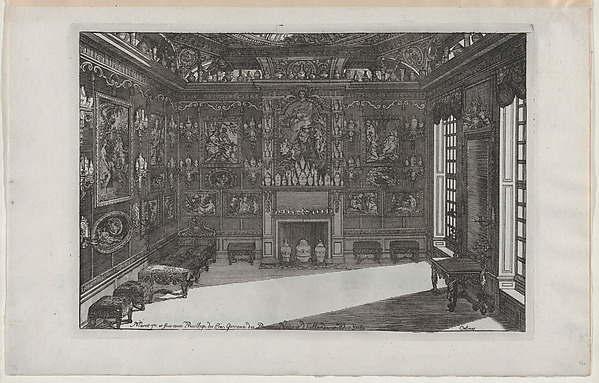
The great private houses of Europe were often obsessive record keepers because household management, collecting and succession were understood as parts of the same activity. Inventories recorded paintings beside furniture, textiles, silver and books. Their purpose was practical, but centuries later these documents became maps through which scholars could reconstruct rooms, collections and lives.
An inventory can therefore become more valuable as the object it describes becomes less accessible.
The modern family office already possesses most of the machinery required to do this properly. It has governance, secure systems, legal records, asset registers and people employed to think beyond the next month.
What it often lacks is somebody whose responsibility is not simply to protect the value of things, but to protect their meaning.
That distinction sounds sentimental until the day an estate is divided.
Then it becomes very practical indeed.
A house should know what it owns.
A serious house should also know why it kept it.