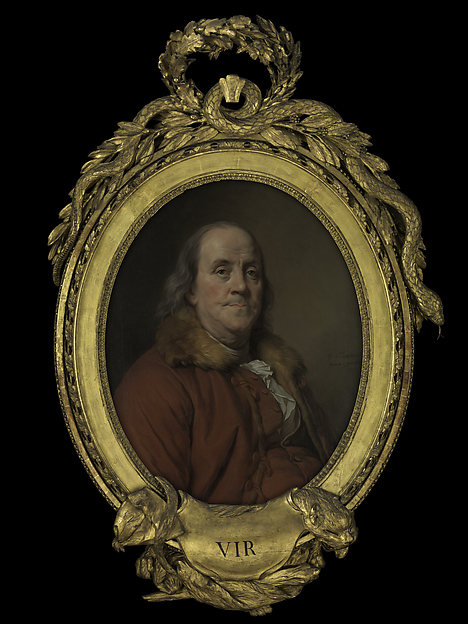

Adam Smith, engraving after the Tassie medallion of 1787. Via Wikimedia Commons, public domain
Everyman’s Library
The Wealth of Nations
The founding text of the house. Milano mark, 1776.
$40.00
Available · worldwide delivery
The maison’s noteFirst published in 1776, the year in our mark. Everyman’s Library keeps it in the cloth-bound, sewn edition a founding text deserves.
- Author
- Adam Smith
- Publisher
- Everyman’s Library
- Published
- November 1991
- Pages
- 1136
- Format
- Hardcover
- Size
- Standard
- Language
- English
The LIBRO Note
This is the book the house is dated to. The 1776 in the LIBRO mark is not a foundation year; it is the year Adam Smith published An Inquiry into the Nature and Causes of the Wealth of Nations, and the maison keeps that date the way a family keeps a founding deed. Every argument the house makes about capital (that it compounds, that it prefers patience, that knowledge is the oldest form of it) begins somewhere in these eleven hundred pages. We keep it in the Everyman’s Library edition because a founding text should be sewn, clothed and shelved, not summarised.
The Library Essay
The year the modern economy learned to describe itself
In March 1776, a retiring Scottish professor of moral philosophy published two volumes with the London house of Strahan and Cadell. The same spring, on the other side of the Atlantic, thirteen colonies were drafting their separation from the empire whose commercial policy Smith had spent a decade dismantling on paper. The coincidence is one of history’s better jokes: the political declaration and the economic one arrived in the same year, and the second has proved at least as durable as the first.
The Wealth of Nations is remembered in fragments: the pin factory, the invisible hand, the butcher and the baker serving dinner out of self-interest rather than benevolence. The fragments mislead. Smith wrote a system, not a slogan. The division of labour opens the book because it is the engine of everything that follows: specialisation creates surplus, surplus seeks exchange, exchange requires trust, price, and law. What reads at first as a defence of self-interest is in fact a study of coordination, of how a society of strangers manages to feed, clothe and house itself without anyone being in charge of the whole.
It endured because it keeps being useful to people with opposite intentions. Free traders and their critics both argue from it; the passage on the real price of every thing ("the toil and trouble of acquiring it") sits as comfortably in a labour theory as in a market one. Smith himself resists conscription. He distrusted merchants who conspired against the public, doubted joint-stock companies, and wrote an entire earlier book, The Theory of Moral Sentiments, on sympathy as the ground of human conduct. The economist the twentieth century invoked was always narrower than the philosopher the eighteenth century actually produced.
The book’s institutions are the house’s institutions. It was written between Kirkcaldy and Glasgow inside the Scottish Enlightenment, in conversation with David Hume and against the French Physiocrats, and it treats libraries, universities, banks and states as characters with incentives rather than as furniture. Book V, the least quoted and perhaps the most modern, is a theory of what a state must fund (defence, justice, public works, education) precisely because markets will not.
For LIBRO the argument is close to home. Smith’s deepest claim is that prosperity is accumulated understanding: that a nation’s wealth is not its gold but its capacity, held in people and practices, to make things and keep promises. Knowledge as private capital is not the house’s metaphor. It is Smith’s. The maison simply dates itself to the year the case was first made in full.
In the Collections